

How It Works
LoadForge checks the health of your host every 5 minutes and records detailed response time metrics. This data is analyzed to provide both real-time alerts and historical performance trends.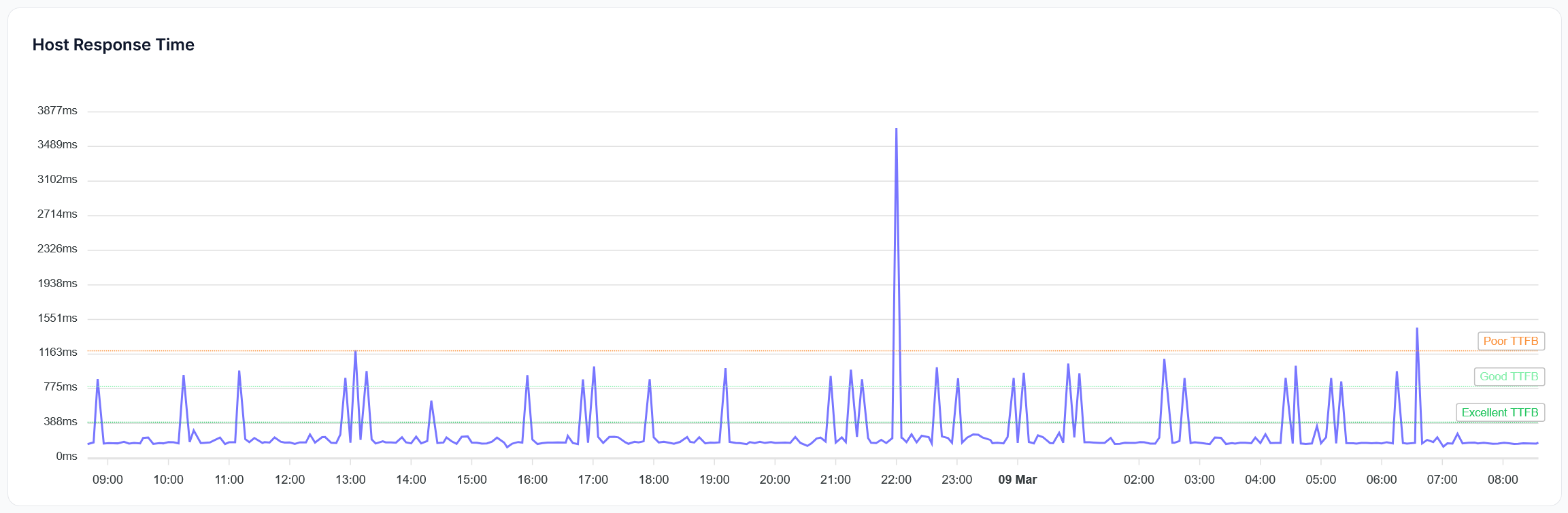
Response Time Monitoring Dashboard
Key Metrics
Response Time
Response time measures how quickly your server responds to requests, directly impacting user experience and satisfaction. LoadForge tracks:- Average Response Time: The mean time it takes for your server to respond to requests
- Response Time Distribution: How response times vary across different percentiles
- Time-of-Day Patterns: Identifying peak load times that may affect performance
Uptime
Uptime monitoring tracks the availability of your service, ensuring that your application remains accessible to users. LoadForge provides:- Real-Time Status: Immediate notification if your service becomes unavailable
- Uptime Percentage: Historical record of your service’s reliability
- Downtime Analysis: Insights into patterns or causes of service interruptions
Response Time Ratings
LoadForge categorizes response times into performance brackets to help you quickly assess your server’s performance:Excellent
Under 200ms
Good
200-500ms
Fair
500-1000ms
Poor
Over 1000ms
Percentile Distribution
LoadForge provides two key distribution charts to help you understand your response time patterns:- Performance Brackets: Shows what percentage of responses fall into each performance category
- Time-of-Day Variation: Identifies peak load times that may be affecting performance
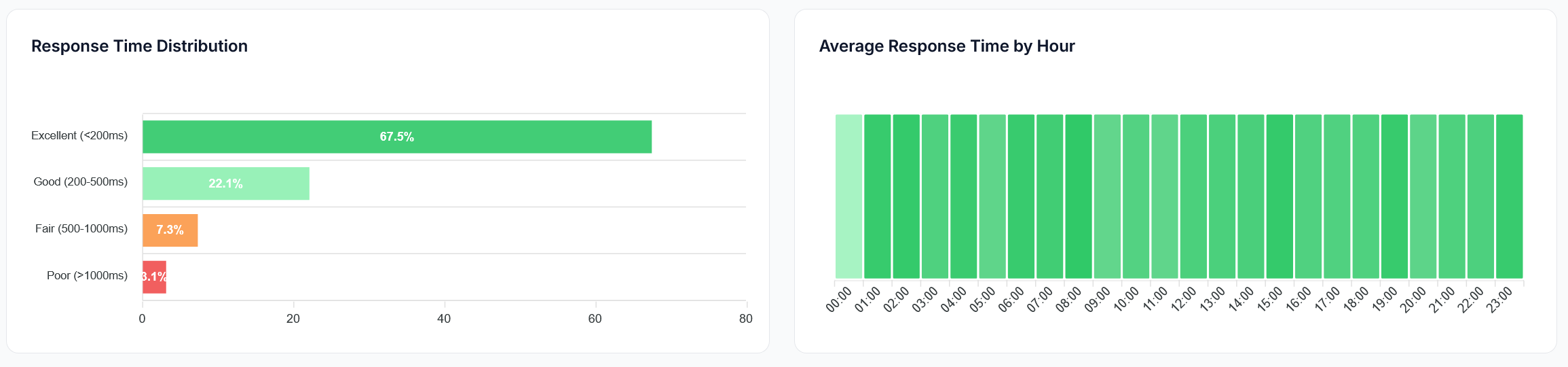
Response Time Percentile Distribution
Alerts & Notifications
LoadForge provides real-time alerts when your host:- Becomes unresponsive
- Experiences a significant performance drop
- Shows a pattern of degrading response times
- Email (default)
- Slack integration
- Zapier webhooks
Historical Analysis
Historical response time data allows you to:- Track long-term performance trends
- Identify gradual slowdowns before they become critical
- Compare performance before and after infrastructure changes
- Correlate response time issues with specific events or changes
Impact on LoadForge Score
Response time metrics account for 30% of your overall LoadForge Score, making them a critical component of your site’s performance rating.Core Web Vitals
Learn about real user experience metrics
Lighthouse
Discover technical performance insights